

Децентралізований VPN проти традиційного VPN: у чому різниця?
Більшість VPN не можуть забезпечити ту конфіденційність, яку обіцяють. Ось що насправді змінює децентралізація і чому важлива архітектура вашого VPN

Поділіться
Більшість людей використовують VPN, щоб залишатися приватними в Інтернеті. Проблема в тому, що традиційні VPN побудовані на протиріччі: щоб приховати вашу активність від інтернету, ви передаєте її компанії і довіряєте, що вона не буде її переглядати.
Децентралізовані VPN (dVPN) застосовують інший підхід. Замість того, щоб направляти трафік через сервери, контрольовані одним провайдером, вони використовують незалежно керовані вузли. Це усуває центральну точку довіри, відмови та журналювання, що робить централізовані VPN ризиком для конфіденційності.
NymVPN робить ще один крок далі. Поєднуючи децентралізовану маршрутизацію з мікснетом, що генерує шум, це захищає не лише ваші дані, а й ваші метадані – шаблони трафіку, які показують, з ким ви спілкуєтесь, коли і як часто.
An error occurred processing the markdown
Маршрутизація з багатьма стрибками за замовчуванням
Традиційні VPN маршрутизують трафік через один сервер – що означає, що сервер бачить вашу повну сесію. dVPN за замовчуванням маршрутизують трафік через кілька незалежних вузлів, тому жоден вузол ніколи не має повної картини. Швидкий режим NymVPN використовує два перескакування; Анонімний режим використовує п’ять.
Важливо: Що робить dVPN справді децентралізованим?
Щоб VPN був справді децентралізованим, він повинен відповідати двом умовам:
- За замовчуванням це багатоступеневе з'єднання, з мінімум двома незалежними серверами.
- Ці сервери не належать і не контролюються однією і тією ж особою або організацією.
Отже, якщо компанія VPN пропонує щось на кшталт функції подвійного VPN, використання 2 серверів не означає, що ви залишаєтесь приватними, оскільки одна компанія може бачити ваші дані на обох.
Немає централізованого ведення журналу
Оскільки вузли працюють незалежно, жодна центральна влада не може збирати журнали або бути примушеною кимось передавати їх. Сервери NymVPN керуються ентузіастами конфіденційності по всьому світу, які отримують нагороди у вигляді $NYM токена за надання якісного обслуговування користувачам. Навіть якщо зловмисний оператор вузла спробує записати трафік, він побачить лише невеликий зашифрований фрагмент і не матиме можливості його зрозуміти.
Відкритий та перевірний
Традиційні VPN можуть використовувати протоколи з відкритим кодом, такі як WireGuard, але їх загальна кодова база є власницькою. Користувачі повинні довіряти тому, що код є безпечним і добре підтримується, без можливості перевірити це самостійно. dVPN зазвичай є відкритим програмним забезпеченням: будь-хто може перевіряти, аудіювати та оскаржувати реалізацію. Але це не правило: завжди перевіряйте це!
Код NymVPN доступний публічно та пройшов незалежну перевірку безпеки.
Бездовірче управління мережею
Традиційні VPN підтримують централізований каталог серверів: одна компанія вирішує, що доступно, і користувачі не мають видимості щодо того, як або чому. Топологія мережі NymVPN керується за допомогою блокчейну Nyx. Жодна окрема влада не контролює, які вузли активні. Оператори вузлів отримують винагороди у токенах $NYM на основі продуктивності, з погодинною рекалібруванням мережі для підтримки надійності системи.
Чим NymVPN перевершує інші dVPN?
Більшість децентралізованих VPN захищають вміст вашого трафіку. NymVPN також захищає ваші метадані. Тепер із штучним інтелектом, що полегшує систему спостереження, це є більш важливою проблемою, яку потрібно вирішити.
Що таке метадані?
Метадані — це все, крім самого повідомлення: з ким ви спілкувалися, коли, як довго і звідки. Не має значення, що ваші повідомлення зашифровані, якщо видимий характер ваших комунікацій. Джерело журналіста можна визначити лише за частотою контактів. Мережу активіста можна змоделювати, не читаючи жодного повідомлення. Розвідувальні агентства та системи спостереження на основі штучного інтелекту націлюються на метадані саме тому, що вони переживають шифрування.
Mixnet захищає від стеження штучного інтелекту
Анонімний режим NymVPN спрямовує трафік через 5-шаровий генеруючий шум мікснет: вхідний шлюз, три проміжні міксоноди, які переставляють і перемішують зашифровані пакети, та вихідний шлюз. Додано маскувальний трафік, щоб приховати часові шаблони. Ця топологія гарантує, що жоден окремий вузол не зможе пов’язати користувача з його трафіком, і навіть штучному інтелекту буде надзвичайно важко з упевненістю відновити ваш маршрут.
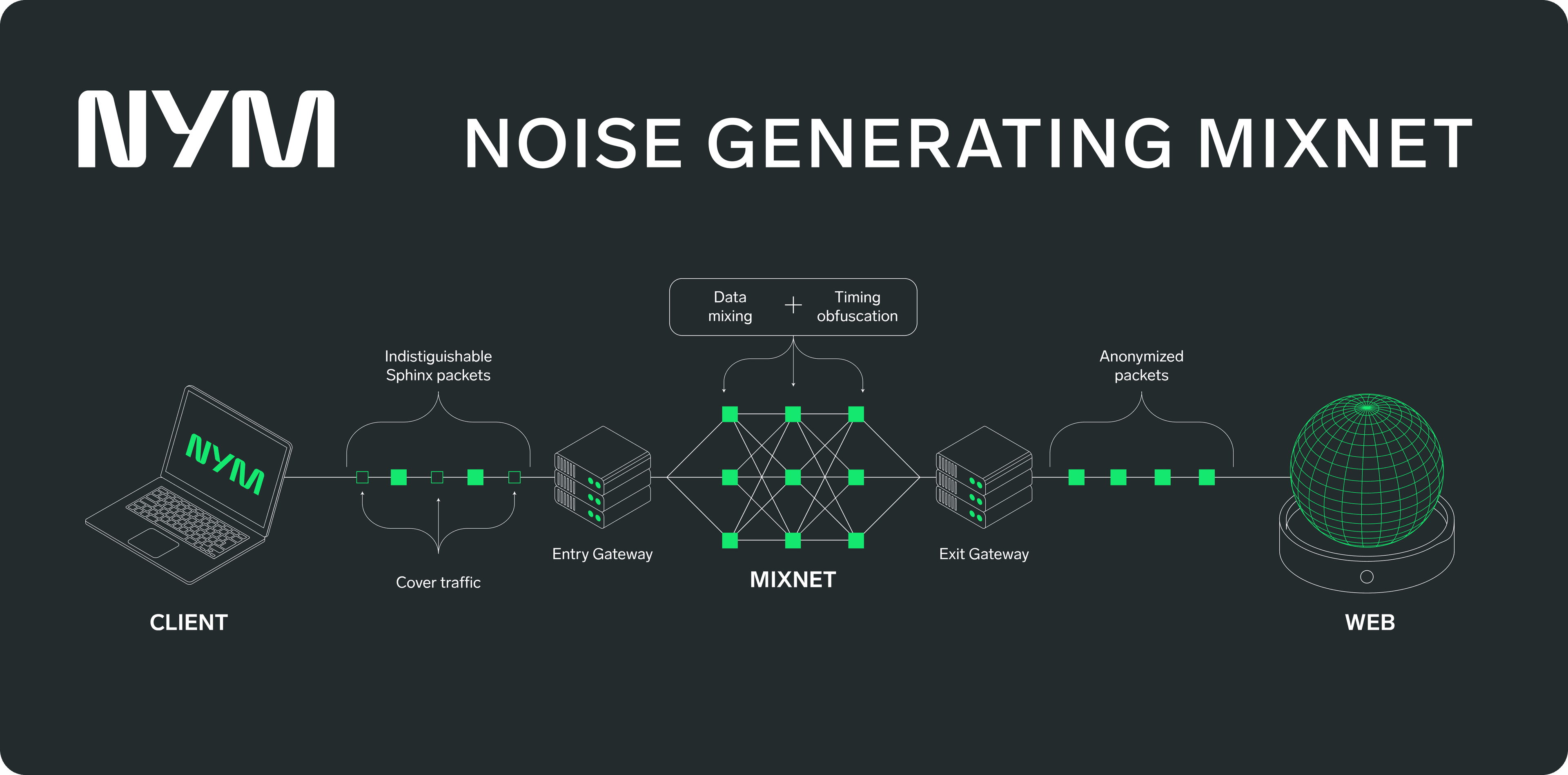
Mixnet (або змішувальна мережа) визначення: Мережа конфіденційності, де зашифровані пакети перемішуються через кілька вузлів, з додаванням допоміжного трафіку для протидії аналізу трафіку. На відміну від простої маршрутизації з кількома пересадками, змішані мережі переставляють пакети та вводять затримки у часі, які роблять обчислювально неможливим відтворення потоків трафіку.
Не лише приватність, а й швидкість
Для користувачів, які надають пріоритет швидкості, Швидкий режим NymVPN забезпечує 2-х сегментну децентралізовану маршрутизацію через AmneziaWG, форк протоколу WireGuard. Це значно більш приватно, ніж будь-який традиційний VPN, з продуктивністю з'єднання, близькою до стандартної.
Отже, вам потрібен dVPN?
Традиційні VPN зміщують проблему конфіденційності, не вирішуючи її. Замість того, щоб довіряти вашому Інтернет-провайдеру, ви довіряєте компанії. Для журналістів, активістів та всіх, хто живе під наглядом, – людей, для яких конфіденційність не є вибором, а необхідністю – ця різниця має величезне значення.
Децентралізовані VPN усувають центральну точку довіри за замовчуванням. NymVPN додає захист метаданих, якого не може забезпечити жоден традиційний VPN чи стандартний dVPN. Воно побудоване не тільки для противників, які вже збирають дані, а й для приватного інтернету, який має з’явитися.
Посилання
- [CSIRO, ICSI, UC Berkeley](https://www.icsi.berkeley.edu/icsi/news/2017/02/android-vp
dVPN проти централізованих VPN: ЧаПи
dVPN направляє зашифрований трафік через незалежно керовані вузли, а не через сервери однієї компанії. Жоден окремий вузол не може бачити одночасно як джерело, так і призначення, що за задумом виключає централізоване ведення журналу.
Так. Традиційні VPN забезпечують реальний захист, але вони вимагають довіри до однієї компанії щодо всього вашого трафіку. dVPN розподіляє цю довіру між багатьма незалежними вузлами, тому жоден окремий оператор не може зафіксувати повну сесію. NymVPN додає захист метаданих рівня mixnet поверх децентралізованого маршрутизації.
З правильно спроєктованим dVPN жодна окрема організація не має достатньо інформації, щоб ідентифікувати користувача. Архітектура NymVPN забезпечує роботу з нульовими знаннями: навіть Nym не може зв’язати користувача з його трафіком.
Обидва використовують багатострибкову маршрутизацію через незалежні вузли. Tor покладається на волонтерські вузли без економічної зацікавленості, що впливає на надійність. dVPN винагороджують операторів за допомогою токенів блокчейну. NymVPN додатково забезпечує прикриття трафіку та заплутування часу, чого Tor не робить.
Маршрутизація з багатьма перехопленнями додає деяку затримку. NymVPN стимулює операторів за ефективність, а користувачі обирають рівень захисту: Швидкий режим (маршрут з 2 вузлів, оптимізований для швидкості) або Анонімний режим (мікснет з 5 вузлів для максимальної конфіденційності).
Маршрутизація з багатьма перескоками додає затримку порівняно з прямим з'єднанням, і якість вузлів варіюється в децентралізованій мережі. dVPN також, як правило, мають меншу кількість серверів порівняно з великими централізованими провайдерами, що може впливати на доступ до потокового контенту. NymVPN забезпечує ефективність через токен-орієнтовані заохочення, які винагороджують надійних операторів, і дає користувачам вибір між швидкістю (швидкий режим) та максимальною конфіденційністю (анонімний режим).
dVPN усувають централізовані сховища даних, які можуть бути піддані виклику в суд або вилучені. Міксмережа NymVPN йде далі, роблячи шаблони трафіку непомітними навіть для складних супротивників на рівні мережі. Зверніть увагу, що законність VPN відрізняється в залежності від країни, тому обов’язково перевірте місцеві правила там, де ви знаходитесь.
Про авторів
Casey Ford, PhD
Керівник відділу комунікаційЗміст
Читати далі...
Nym більше, ніж VPN
Перший додаток, який захищає вас від спостереження за допомогою штучного інтелекту завдяки мікснету, що генерує шум
Покрокова інструкція щодо анонімного режиму
Як працює мережа Nym mixnet для захисту вашого трафіку
Радикально найнижча ціна на NymVPN: Як ми боремося за відкритий інтернет для всіх
Зробити NymVPN доступним для людей у всьому світі для боротьби з цензурою та побудови відкритого та приватного інтернету